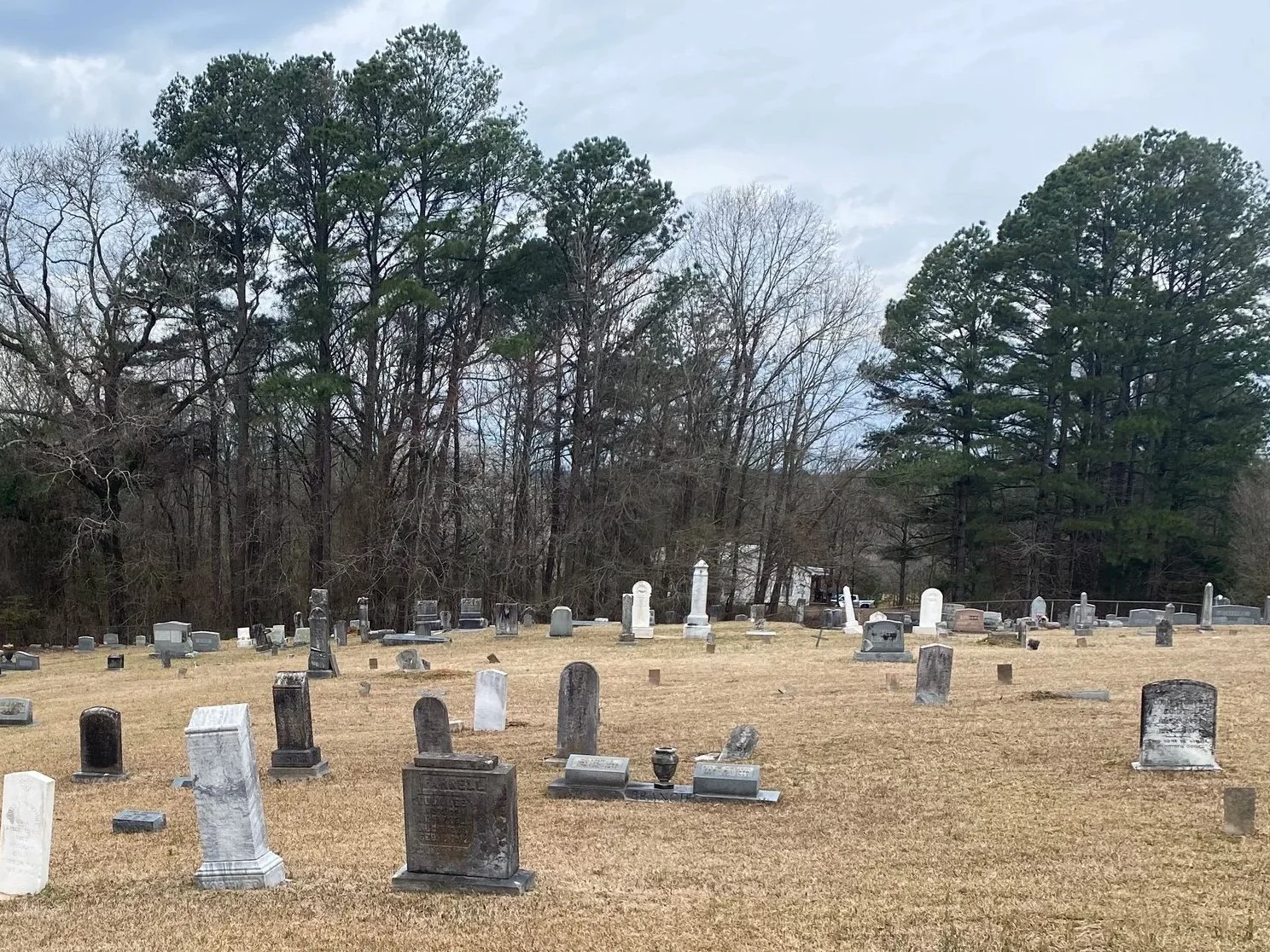
Out on a country road in Mississippi sets an old church cemetery where some of "my people" as we say in the south, are buried. It's a couple of hours away and I'll confess I haven't been there in years. People don't go visit the dead the way they used to and Decoration Day is only kept alive in small towns by people with good manners.
When we arrived at the graveyard atop an eroding hill, my son found my father's headstone first. It was nearly completely buried in mud and Bermuda grass. He cleared it off and we went down the row of markers. My grandparents. The six year old boy they lost who had been the darling of the family. An infant son. Another infant son. An infant daughter. Three tiny markers in a row of sorrow. My great grandparents on both sides of my grandparents. Here and there were others markers etched with the same surname, but I was less sure of who they were or their connection to me.
A graveyard is an experience in perspective. The people buried there who lived not so long ago are unknown to me. Two generations back no one who remembers them is alive. Even though I can say I remember my grandparents the memories are fleeting moments in time, snapshots, or a family story I heard my parents tell. As I roamed around drawing my coat tight against a cold March wind I didn't feel a sense of morbidity but of connection. My grandmother was a devout Christian as was her mother. That faith was passed down to my father and to my sister and me. How many prayers were sent up on my behalf or on behalf of my parents were offered up by the names carved in granite on this hillside?
In former times, when churches were less like country clubs than they are now, the village graveyard was on the church grounds like this one. Imagine the punctuation mark at the end of the minister's sermon that was. Exiting the building and walking past the final resting place of your friends and family. A sermon in itself that begs the question of where you will spend eternity. As modern American Christians we often brush off a visit to the cemetery because our loved one's soul isn't there. True. But the reminder of the brevity of life is.
As we walked around trying to decipher names and connections I thought about the plans of God. I've written about the mind boggling miracle that you are, you can read it here before. Throughout the ages God has been planning you and your life. Ordering countless other lives and events to bring you here.
But the plans of the Lord stand firm forever,
the purposes of His heart through all generations.
Every generation tends to feel like it's the last one. We often see ourselves as being caught up in the ending of history as things wrap up. We actually have no idea where we are in the story, even though we know the ending, or how long the Author intends to make it. We're here and it seems impossible to us that the world would go on without us. We take little time to realize that billions of lives have been lived and that we are aware of a few names from history, but nearly everyone who has ever lived has been forgotten. What a despairing thought.
But God.
It's only in the cold humanist mindset that it's all for nothing. As a Christian everything that has happened in all of history has been part of a plan and has meaning. Not a single life has been forgotten. No struggle was wasted. For believers everything is working together for our good. We think of that verse in relation to ourselves but expand it backwards across the generations and it will boggle your mind.
Nothing has been for nothing.
A graveyard, any graveyard, but old ones are especially poignant, say to us across time all the things we read in scripture and hear in old hymns. We are pilgrims here. We are only passing through. Don't become too attached. Don't love it too much.
This world is not our home.