Trusting God with the winter I can’t see
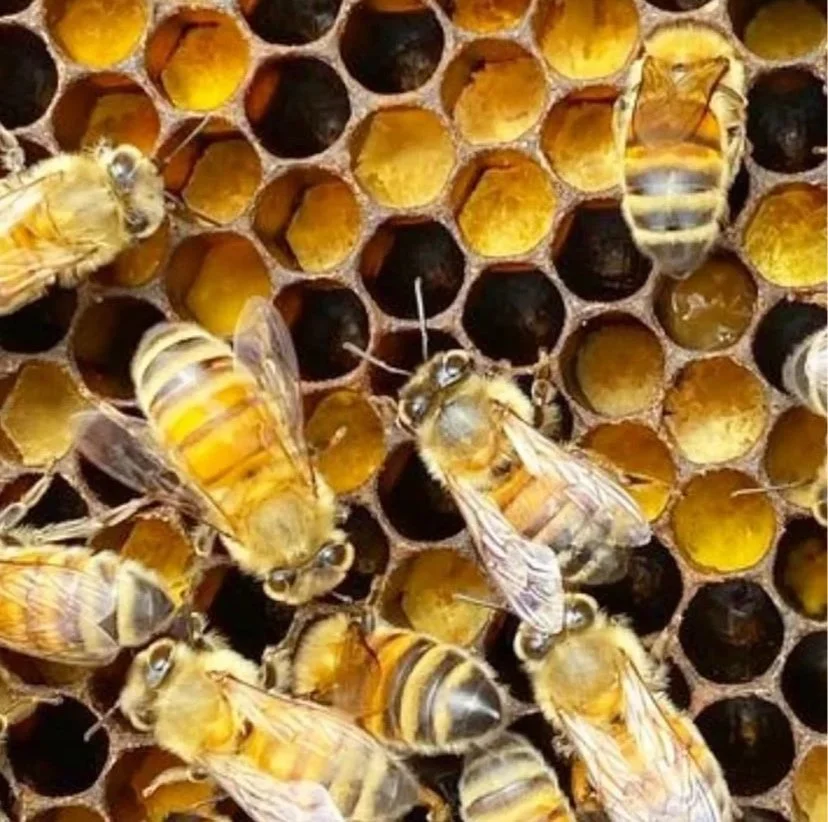
honeybees on a frame of pollen
On a September day that’s still too warm to be excited about fall I head out to the hives with much less enthusiasm than I did in spring when the newness of everything was bursting forth after a long winter. The garden is weedy and neglected and my mind begins to settle into thinking about glowing autumn days and cosy nights. Maybe we’ll have a fire in the fireplace in a month or so. The area around the hives looks much like the rest of the garden. A more dutiful gardener would have tackled the tall weeds by now. A tiny feeling of failure driven by procrastination and distraction rises. My motivation lags this time of year but the bees require a lot of work just now, harvesting honey, cleaning up equipment, storing it, and processing the honey crop, so I have no choice but to press on.
Summer is fading fast and the shorter days are becoming more noticeable. The bees are still busy topping off their honey stores to prepare for winter and I wonder if they know somehow what kind of winter it will be. As a child my mother told me that the thickness of the coat on a “wooly worm” as she called it, revealed secrets about the winter to come. Here in the south we call it a wooly bear, scientific name: Pyrrharctia isabella. Some people believe the coloring of the bands predict either a harsher or milder winter. It’s folklore, but we are often charmed by bits of country wisdom that keeps getting passed down. As far as I know however the bees do the same things consistently to prepare without knowing how trying the winter to come will be.
Along with topping off honey stores, the slowing egg laying of the queen, and the tightening of the cluster, a harsh thing is taking place within the colony. The drones who don’t work to produce anything and use up a lot of resources due to their large size are kicked out of the hive in anticipation of winter. Apart from their colony they will die. I always find this a little sad because the drones are pretty cute bees with their giant eyes and big bodies bumbling around inside the hive with not much to do unless there’s mating to be done.
Their sole reason for existing is to mate with a virgin queen in spring. Drones can eat honey on their own but more often their sisters inside the hive feed them mouth to mouth in a process called trophallaxis. As the shadows of September grow longer and the sun moves north across the horizon the worker bees will sometimes stop feeding the drones and often drive them away from the frames with honey. There’s an old saying “If you don’t work, you don’t eat” and honeybee colonies practice it to the extreme. Drones are eventually driven out of the hive by their sisters. A colony of bees is a super organism. A single bee cannot survive on its own.
Each worker is acting as an individual like the bees drifting to and fro across my bed of orange and pink zinnias. She’s making her own way in the world but her actions contribute to and benefit the colony.
Late next winter when the colony begins to build up in population and anticipate swarming and possibly having a virgin queen, replacement drones will be made.
The bees have a remarkable ability to do what needs to be done when it needs to get done. I wish I had the same kind of drive and persistence. It’s something I envy about them. Procrastination doesn’t seem to be the challenge for them the way it is for me. They have no distractions unless a wasp wanders in or a raccoon comes calling at night.
They go about their preparations for winter without a weather forecast to tell them whether they should store more or less honey. They store all they can. I’ve had a hive starve over winter; finding them in spring with their little faces as far down in a honey cell as they can get with only their little bottoms visible across the frame. A heartbreaking failure on my part to make sure their stores were full enough going into winter. But more often I open the hives to find untouched honey stores because not only did a colony make enough honey for me to take the excess they made more than they needed.
The bees are great at planning for an uncertain future. They go about their work dutifully and faithfully. They are not focused on the outcome. Instead they fulfill the purpose intended for them by their Creator with each early morning flight to a nearby American Holly or perhaps return home with water or pollen for the hive. The hum of the hive isn’t dictated by a weather report or what experts think is happening with the nation’s honeybee population.
Some days that means doing hard tasks like drone eviction or fighting pests that threaten the colony like small hive beetles. Every day it means doing a lot of mundane repetitive tasks over and over again without knowing if all that work will have been necessary come March. Out here in the human world we are told to optimize and monitor everything and a lot of that is because we have so much anxiety about an uncertain future. The bees prepare for winter without knowing the forecast or even observing their wooly worm friends. And while I have no idea what goes on in their tiny brains they appear to be doing this without being consumed and worried in the present.
I’ll be honest a lot of times when I’m in preparation mode it’s with a sense of urgency because an ice storm has been predicted or maybe there’s a shortage of something I think we’ll need. Then out of anxiety and worry I rush around trying to prepare. During a health scare we may decide to start eating better or working out. Having a friend ride with you to dinner launches a car cleaning frenzy. I heard a great quote once, “If you stay ready, you ain’t gotta get ready.”
That’s what the bees are doing. They are preparing constantly and staying ready even if conditions change. This is an attitude I’m trying to cultivate in my own life. Jesus doesn’t tell us not to prepare for the future. In fact several parables demonstrate the faithfulness and stewardship in preparation. While Proverbs tells us to study ants to see how to diligently prepare, Christ tells us not to worry.
Therefore, do not worry about tomorrow, for tomorrow will worry about itself. Each day has enough trouble of its own. Mathew 6:34
And Ecclesiastes, a book I love more and more the older I get, balances it all perfectly. In chapter 11 we are told both to not let our hands be idle but also to banish anxiety from our hearts. To do all you know to do and then leave the outcome to God.
The bees are teaching me not to prepare out of fear but to be more faithful every day with the time and resources God has entrusted me with in this season of my life. So while I go about my day working and completing daily tasks as the bees do all summer I have to trust God with the winter I can’t see.