A Honeybee Story
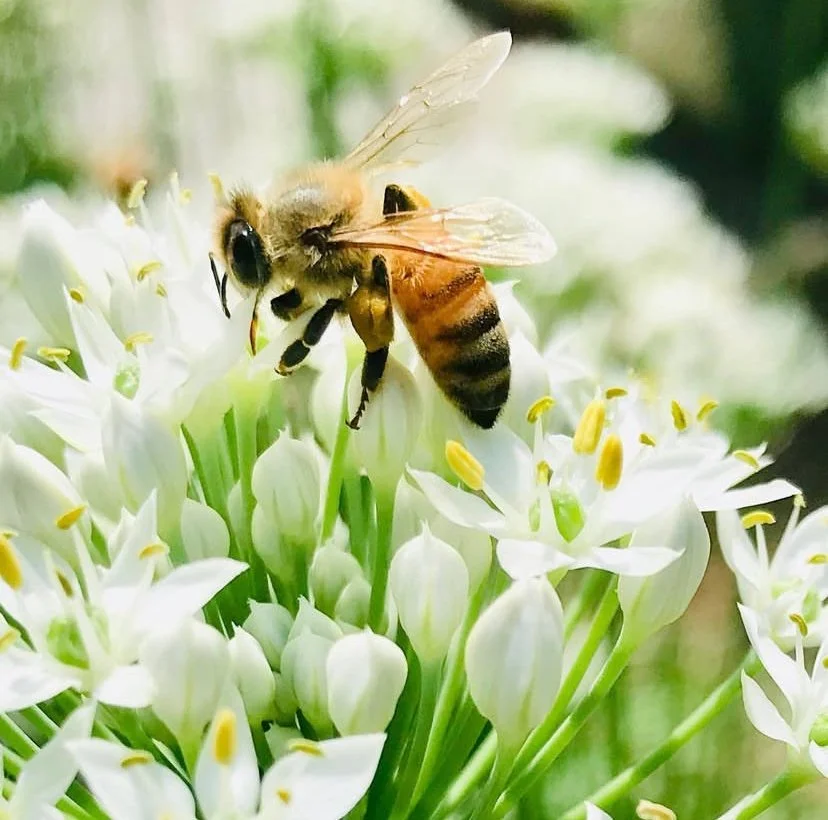
a single honeybee lands on a garlic chive blossom with pollen covered yellow stamens
In the apiary as the first rays of sunlight peek over the horizon the bees stir in the warm darkness of the hive. Sunlight falls across the entrance to the hive providing just a sliver of light. Inside foraging bees emerge onto the landing board ready to make the first flight of the day. One bee flies off in the direction of the sun making one of fifteen or so flights she'll complete before dark.
During these flights she will only travel as far as necessary to gather what the colony needs. Though she’s capable of traveling several miles, in the suburban neighborhood where she lives she will not have to travel even one. The residents surrounding her beekeeper's home are gardeners with vegetable gardens and flower beds, there are also clover filled parks, and weed filled backlots.
She finds a brambly thicket of blackberries along an old fence row. Once she has made her choice on this run she will now only collect pollen and nectar from blackberry blossoms. This behavior has a charming name, flower fidelity, ensuring that on each trip back to the hive she carries only one kind of pollen.
She lands on the blossom and uses her brushy legs to scrape the pollen from her body down into her “pollen pants” which are like built in saddle bags. She is able to carry about half her body weight in pollen. She'll fill them and then return to the hive to unpack them into a honeycomb cell in the mysterious depths of the hive.
This is the most solitary part of a bee's life. Having worked within the hive alongside her sisters she has been part of the clean up crew, been a nurse to baby bees, done construction, circulated air through the hive, and been on guard duty. Now in the next part of her life she will go out alone every day to find and bring back what her sisters in the colony need to survive and prosper.
She will perform this final job until her death. She must avoid many dangers and snares while foraging, evading hungry birds and sticky spider webs. She will have no way of knowing if she is foraging from flowers that have been sprayed with dangerous chemicals deadly to her and her species.
If she avoids an untimely death then one warm sunny afternoon she will stop to rest a moment before continuing her mission to deliver her stores to the hive. Not having the energy to continue, her tiny wings worn out in the service of the hive, she will die.
In her life she will have produced 1/12 of a teaspoon of honey.